Synchronizing Terminal Hardware with Digital Checkout Flows for Multi-Channel Retail Data Consistency
Written by Eden Beck · Aug 20, 2026
Synchronizing Terminal Hardware with Digital Checkout Flows for Multi-Channel Retail Data Consistency
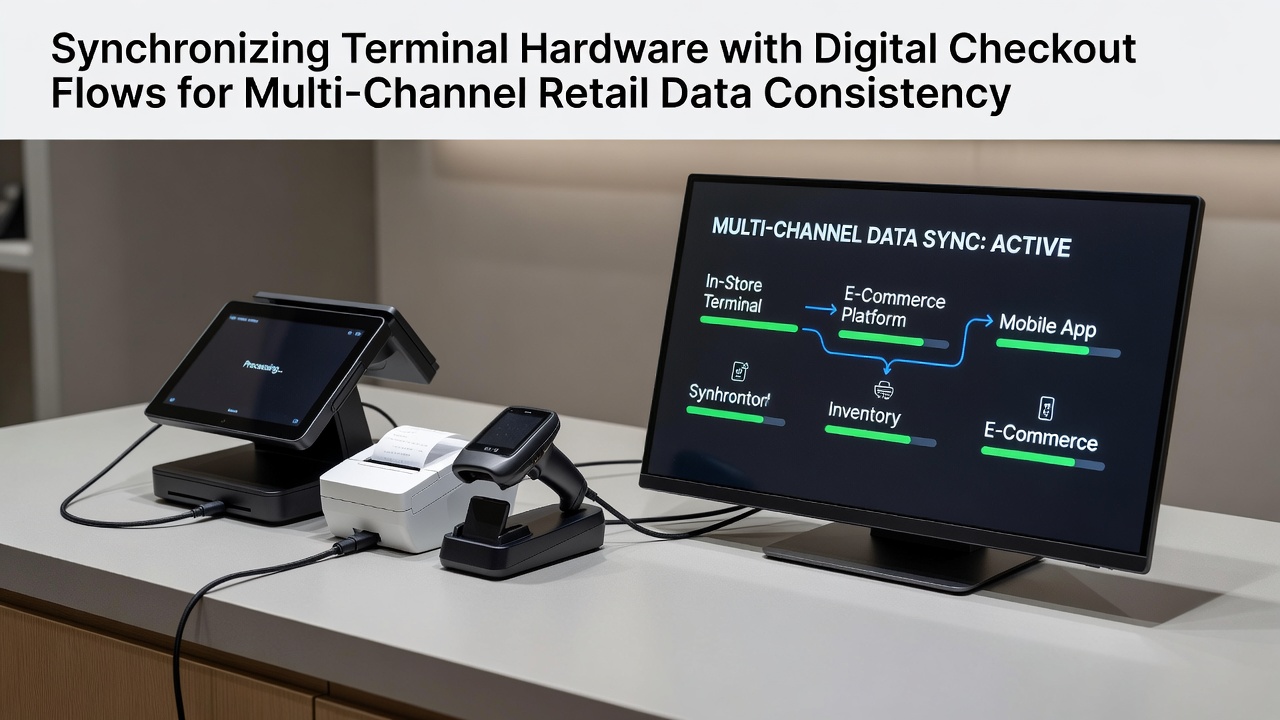
Retail operations have expanded across physical stores, websites, and mobile applications, which creates demand for consistent data between hardware terminals and digital systems. Synchronization ensures that sales records, inventory levels, and customer transactions remain aligned regardless of purchase location. Data from point-of-sale terminals flows into central platforms where online orders update the same records in real time, and this process reduces discrepancies that otherwise appear when channels operate in isolation.
Core Mechanisms of Hardware and Digital Integration
Terminal hardware communicates with digital checkout flows through standardized APIs and middleware layers that translate device outputs into cloud-based formats. Retailers connect legacy card readers and receipt printers to modern inventory management software, while cloud services handle the translation of transaction data into formats compatible with e-commerce platforms. Research from the National Institute of Standards and Technology shows that structured data exchange protocols improve accuracy when terminals transmit details such as item quantities and payment confirmations directly to shared databases.
Real-time polling occurs at intervals measured in seconds rather than minutes, and this frequency allows stock counts to reflect both in-store purchases and website orders without delay. Systems employ message queuing to manage peak loads during high-volume periods, and the queues prevent data loss when network conditions fluctuate. Observers note that retailers who implement these queues experience fewer instances of oversold products because updates propagate across all channels before the next transaction begins.
Impact on Inventory and Transaction Records
Multi-channel consistency depends on matching identifiers for products and orders across every system. When a terminal processes a sale, the event triggers an immediate decrement in the shared inventory ledger, and the same ledger receives increments when digital returns are processed. Studies indicate that unified ledgers cut reconciliation time by linking each transaction to a single source of truth rather than requiring manual cross-checks between separate databases.
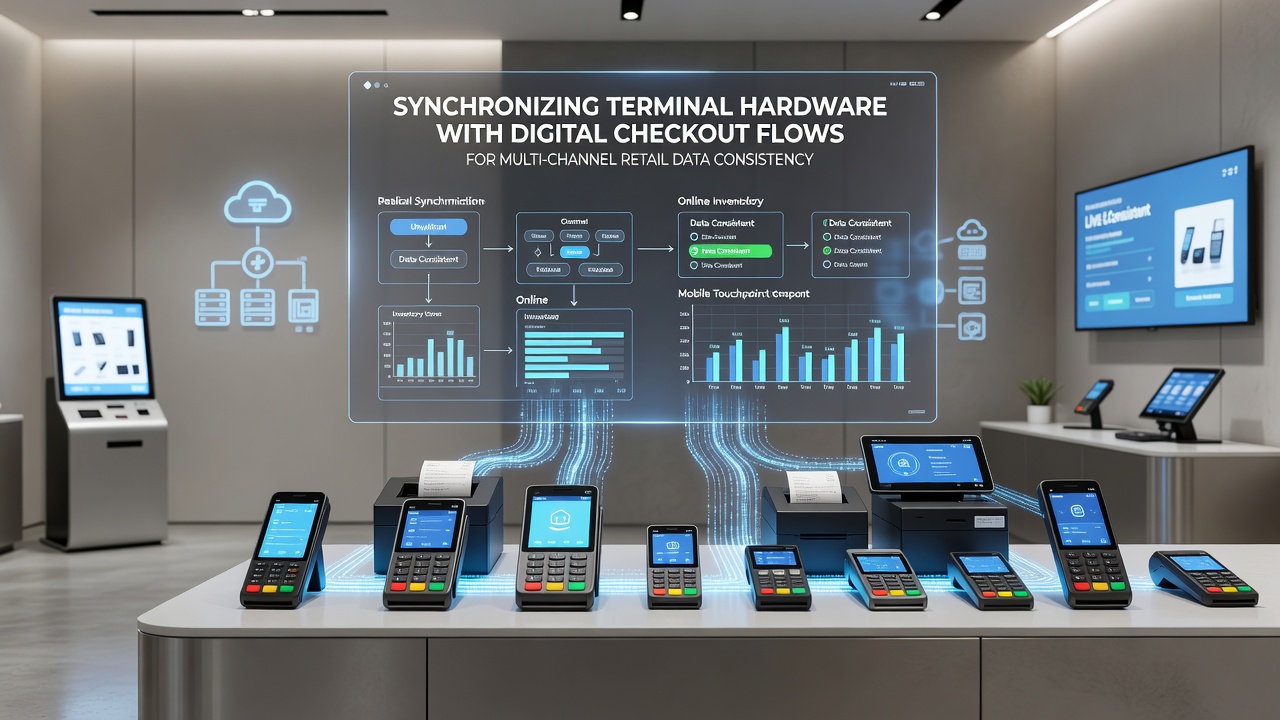
Payment details also travel through the same pathways. Card authorizations received at terminals receive the same fraud screening rules applied to digital wallets, and this uniform approach produces comparable approval rates across channels. Figures from industry reports reveal that synchronized authorization logs help identify patterns that affect both store and online performance without requiring separate analysis teams for each channel.
Technical Challenges and Resolution Patterns
Hardware variations create obstacles when older terminals lack native support for modern data formats, yet middleware adapters bridge those gaps by converting proprietary signals into JSON or XML structures. Network latency remains a factor in remote locations, and retailers address it by deploying edge computing nodes that cache recent transactions until connectivity resumes. Those nodes then forward complete records to the central system, and the process maintains sequence integrity through timestamp verification.
Security requirements add another layer because payment data must travel encrypted from terminal to cloud endpoint. Protocols such as TLS 1.3 combined with tokenization replace raw card numbers with unique identifiers, and compliance frameworks require regular audits of these encryption paths. Data shows that organizations maintaining audit trails for every synchronization step encounter fewer regulatory findings during inspections.
Developments Expected by August 2026
Standards bodies continue to refine specifications for device interoperability, and several working groups plan to release updated guidelines during the Retail Technology Summit scheduled for August 2026. These guidelines focus on expanding support for contactless hardware that interacts directly with progressive web applications, which would allow terminals to update digital carts without intermediate servers. Early testing indicates that the new specifications reduce handshake times between devices and online flows by measurable percentages.
Academic papers from European research consortia have examined pilot programs that combine 5G connectivity with terminal synchronization, and the results suggest faster propagation of stock changes during high-traffic events. Retailers in multiple regions have begun preparing hardware upgrades to align with those forthcoming standards ahead of the August 2026 timeline.
Conclusion
Synchronization between terminal hardware and digital checkout flows rests on consistent data protocols, real-time updates, and secure transmission methods that keep inventory and transaction records aligned across channels. Retail systems built on these principles deliver matching information whether a customer buys in a store or online, and ongoing standards work points toward further refinements by August 2026. Organizations that maintain these connections report fewer reconciliation errors and more reliable multi-channel operations as a direct result of the integrated architecture.